What is a dental implant and how does it work?
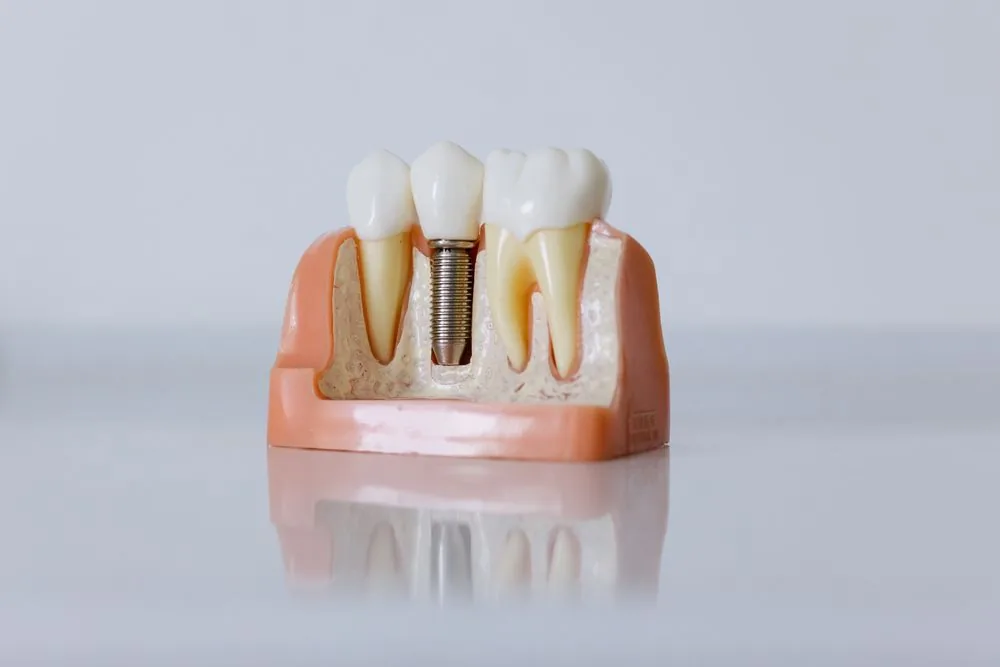
A dental implant is the closest thing to a natural tooth for replacing a lost piece. It looks, feels and works like your own tooth. Here's how it works.
The three parts of an implant
- Implant: a small titanium screw that replaces the root and integrates into the bone.
- Abutment: the piece that connects the implant to the crown.
- Crown: the visible part, custom-made, that looks like a natural tooth.
How does it integrate into the bone?
Titanium can fuse with bone in a process called osseointegration. This gives the implant a firm base, like a tooth's root, so you can chew with confidence.
Why replace a lost tooth?
A gap isn't just aesthetic. Over time, neighboring teeth tilt, the opposing tooth over-erupts and the bone in the area resorbs. Replacing the piece in time protects your bite and your bone.
An implant doesn't just restore the tooth: it preserves the bone and the balance of your whole bite.
Who is a candidate?
Most adults in good general health with enough bone are. When bone is lacking, a graft can be assessed first. Smoking and certain health conditions require evaluation. Everything is defined with an imaging diagnosis.
Frequently asked questions
Does the implant look natural?
Yes. The crown is designed to your color and shape to blend with the rest of your teeth.
Does placing an implant hurt?
The procedure is done under local anesthesia; most report minor, manageable discomfort afterward.
How long does the whole process take?
It usually takes a few months, because you must wait for osseointegration before placing the final crown.
Recover your lost tooth
Book your assessment with imaging diagnosis and learn your implant plan.
Book appointment